Languages of Aërwa
Aërwa is an ancient world. Across its many ages, kingdoms and empires have risen and fallen, leaving behind ruined castles, forsaken scriptures, and fragments of ancient lore.
Yet among the greatest witnesses of their existence are the languages they left behind.
Discover the tongues spoken by the many peoples and races of Aërwa — some still heard across the land, others surviving only upon weathered stone, forgotten manuscripts, and the echoes of ages long past.
Volúnarin, the language of the Erianar
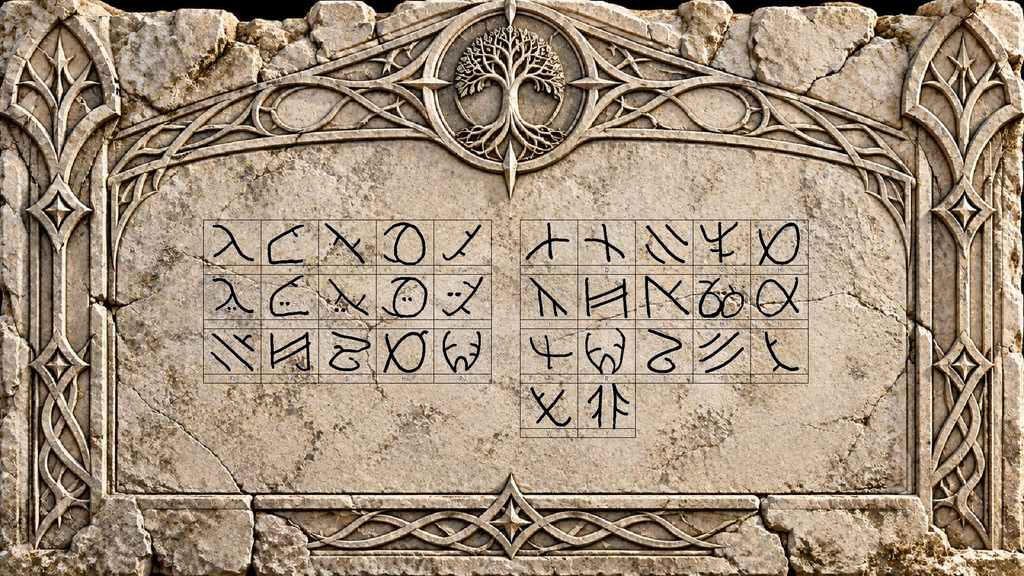
Volúnarin was the first language I created for Aërwa. It is the ancient tongue of the Erianar, the first children of Nür, and one of the great languages inherited from the earliest beings of the world.
Its foundations draw primarily from Latin, Old English, Swedish, and Finnish, languages whose sounds, histories, and structures helped shape the character I envisioned for Erianarish. These influences, however, serve only as foundations. Their roots have been altered, combined, and reshaped through Volúnarin’s own vocabulary, grammar, sounds, and linguistic conventions.
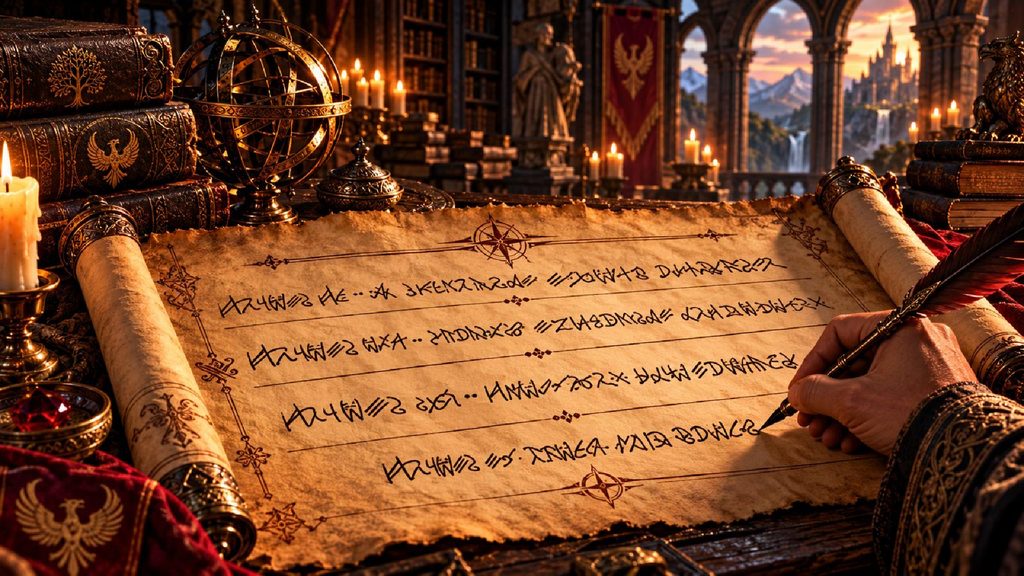
Though Volúnarin is not the oldest language ever spoken in Aërwa, it became one of the great tongues of antiquity. Ancient scriptures, prayers, inscriptions, and forgotten writings still bear its words, testament to the influence once exercised by the Erianar.
By the Seventh Age — The Age of the Trees, during which Paladin of God — Ascension takes place, knowledge of Volúnarin has greatly diminished, and only few can still understand it; Nevertheless, the language endures upon ancient pages and forgotten stones: A surviving voice from the elder Ages of Aërwa.